Date
Friday, December 11, 2026
Time
07:00–10:00AM CT
Location
Great Hall A-D
Format
In person + virtual
General Information
A clinically focused overview of anti-BCMA bispecific antibodies in multiple myeloma, spanning from biological foundations to real-world implementation. International experts will review the mechanisms of BCMA targeting and T-cell engagement, highlighting key pathways of response and resistance. The program will then examine pivotal clinical trial data in relapsed/refractory disease, followed by emerging evidence supporting earlier use in the treatment paradigm.
This dedicated symposium will explore real-world outcomes, emphasizing differences from clinical trials and the importance of patient selection. Practical aspects of care will be addressed, including out-patient administration models, step-up dosing strategies, and multidisciplinary coordination. Particular attention will be given to toxicity management, with a strong focus on infection risk, prevention strategies, and long-term immune suppression associated with bispecific therapies. We will conclude with an interactive clinical case discussion, allowing participants to apply evidence-based decision-making to real-life scenarios, including sequencing with CAR-T therapies and management of complex patients. This program aims to equip clinicians with actionable insights to optimize the safe and effective integration of bispecific antibodies into routine myeloma care.
At the end of this symposium, participants will be able to:
- Explain the biological rationale of anti-BCMA bispecific antibodies, including mechanisms of action, immune engagement, and resistance pathways.
- Interpret key clinical trial data evaluating anti-BCMA bispecific antibodies in relapsed/refractory multiple myeloma, including efficacy and safety outcomes.
- Assess the evolving role of bispecific antibodies in earlier lines of therapy and their positioning relative to other BCMA-targeted approaches such as CAR-T cells.
- Evaluate real-world evidence to inform patient selection, expected outcomes, and management strategies outside of clinical trials.
- Implement practical strategies for outpatient administration, including patient monitoring, step-up dosing logistics, and multidisciplinary coordination.
- Recognize and manage the toxicities of bispecific therapy, including cytokine release syndrome, neurotoxicity, and infectious complications, with prophylaxis and immunoglobulin replacement where indicated.
- Apply evidence-based decision-making to complex real-life cases, including sequencing with CAR-T therapies and treatment after BCMA-directed therapy.
This symposium is designed for hematologists and medical oncologists, in academic and community practice, who manage patients with multiple myeloma across the disease continuum and are integrating anti-BCMA bispecific antibodies into routine care. It is also intended for transplant and cellular therapy specialists involved in sequencing decisions between bispecific antibodies and CAR-T therapies; advanced practitioners, including nurse practitioners, physician associates, and oncology nurses, who manage patients on these therapies day to day; oncology pharmacists; infectious disease specialists; and hematology and oncology fellows and trainees.
Date
Friday, December 11, 2026
Time
07:00–10:00AM Central Time
Location
Ernest N. Morial Convention CenterGreat Hall A-D900 Convention Center Blvd.New Orleans, LA 70130
Format
In person + virtual

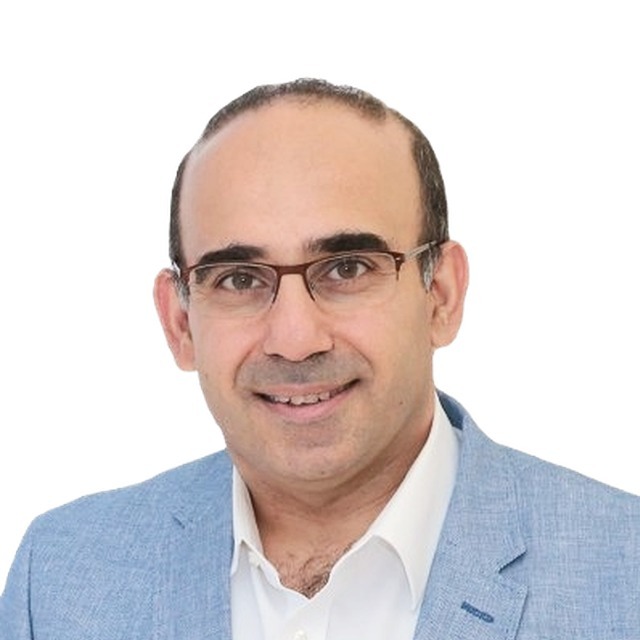
Prof. Mohamad Mohty
Activity director · Paris, France
Dr Mohamad Mohty is a full Professor of Hematology and head of the Hematology and Cellular Therapy Department at the Saint Antoine Hospital and Sorbonne University in Paris, France. He obtained his medical degree from the University of Montpellier, France, and PhD from the University of Marseille, France. He is also head of a translational research team (Inserm) at the Saint Antoine Research Centre in Paris.
Dr Mohty is the past president of the European Society for Blood and Marrow Transplantation (EBMT), and the current chairman of the Acute Leukemia Working Party of the EBMT. He is also the founder and chairman of the International Academy for Clinical Hematology (IACH) and board member of the EBMT and the Intergroupe Francophone du Myélome (IFM).
In addition to publishing more than 900 peer reviewed articles in the field of stem cell transplantation, leukemia, and myeloma, Dr Mohty also serves as Editor in Chief of the journals Bone Marrow Transplantation and Clinical Hematology International. He also serves as an editor, board member, and/or reviewer across numerous other reputable journals.
Accreditation Statement
This activity has been planned and implemented in accordance with the essential areas and policies of the Accreditation Council for Continuing Medical Education (ACCME) through the American University of Beirut Medical Center (AUBMC). The Healthcare Professional Development Center (HPDC) at AUBMC is accredited by the ACCME to provide continuing medical education for physicians.
The Healthcare Professional Development Center at AUBMC designates this live activity for a maximum of 3 AMA PRA Category 1 Credits™. Physicians should only claim credit commensurate with the extent of their participation in the activity.
Evaluation Form and CME Certificate
The evaluation and the ability to claim CME credits will be available online approximately 10 working days after the event. An e-mail from AUBMC HPDC will be sent to you with instructions for claiming AMA PRA Category 1 Credits™, and you will have 60 days following the activity to claim credits.
Important Notes
The same e-mail address which was used for registration and where you receive the e-mail and instructions from AUBMC HPDC will need to be used in order to claim credits.
Faculty Disclosure
In accordance with the Standards for Integrity and Independence in Accredited Continuing Education issued by the Accreditation Council for Continuing Medical Education (ACCME), the Healthcare Professional Development Center at AUBMC requires the identification, mitigation and disclosure of all faculty financial relationships with ineligible companies to ensure CME activities are free of commercial bias.
The following faculty have indicated that they have a relevant financial relationship, which in the context of their presentation(s), could be perceived as a potential conflict of interest:
| Name | Company | Relation |
|---|---|---|
| Dr. Mohamad Mohty | Amgen | Lecture fees |
| Janssen | Lecture fees and advisory board | |
| Takeda | Lecture fees | |
| Sanofi | Lecture fees and advisory board | |
| GSK | Lecture fees and advisory boards | |
| Menarini | Lecture fees and advisory boards | |
| Pfizer | Lecture fees and advisory boards | |
| BMS | Lecture fees and advisory boards | |
| Dr. Karthik Ramasamy | AstraZeneca | Honoraria |
| Adaptive Biotech | Honoraria and advisory board | |
| Bristol Myers Squibb | Honoraria, research, and advisory board | |
| Amgen | Honoraria | |
| GSK | Honoraria, research, and advisory board | |
| Johnson and Johnson | Honoraria, research, and advisory board | |
| Menarini Stemline | Honoraria and advisory board | |
| Pfizer | Honoraria, research, and advisory board | |
| Sanofi | Honoraria, research, and advisory board | |
| Takeda | Honoraria | |
| Dr. Elena Zamagni | Janssen | Honoraria and advisory role |
| Bristol-Myers Squibb | Honoraria and advisory role | |
| Sanofi | Honoraria and advisory role | |
| Amgen | Honoraria and advisory role | |
| GlaxoSmithKline | Honoraria and advisory role | |
| Pfizer | Honoraria and advisory role | |
| Oncopeptides | Honoraria and advisory role | |
| Menarini-Stemline | Honoraria and advisory role | |
| Roche | Honoraria and advisory role | |
| AstraZeneca | Honoraria and advisory role |
The rest of the faculty have indicated they have no relationship which, in the context of their presentation(s), could be perceived as a potential conflict of interest.
Why Attend
Three hours
Seven international experts
Practical answers for the bispecific era
Review the latest anti-BCMA bispecific data and discuss how to translate it into real-world practice, including sequencing with CAR-T, earlier-line use, outpatient administration, toxicity and infection management, and treatment after BCMA-directed therapy.
Speakers

Mohamad Mohty
France
Maria-Victoria Mateos
Spain
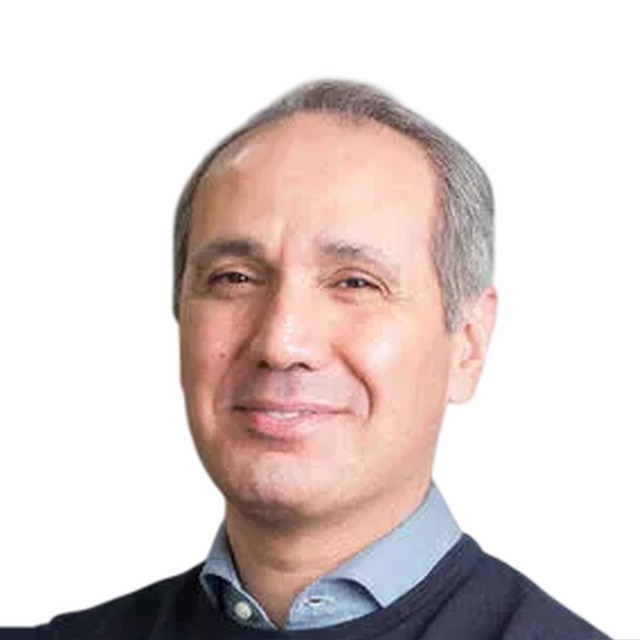
Nizar Bahlis
Canada

Salomon Manier
France
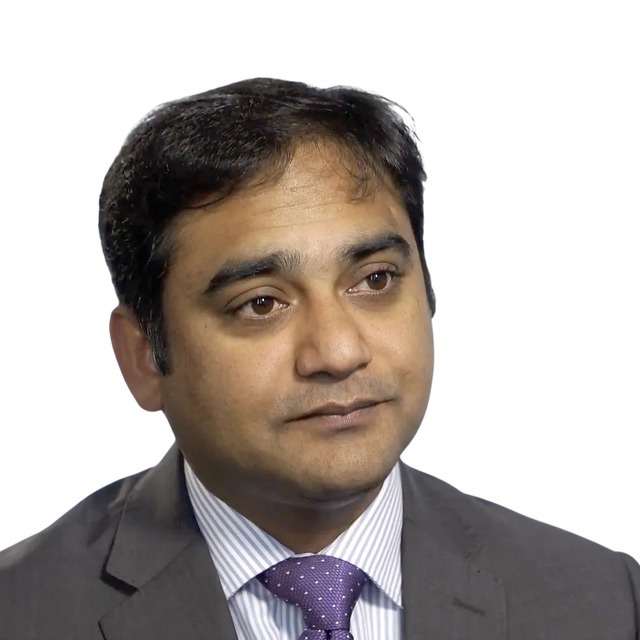
Karthik Ramasamy
UK

Elena Zamagni
Italy

Douglas W. Sborov
USA

Agenda
07:00–07:30
Welcome
07:30–07:35
Overview of objectives and agenda
Mohamad Mohty (France), Maria-Victoria Mateos (Spain)
07:35–08:00
Session 1Biology of Anti-BCMA bispecific antibodies
Presentation20 min
Redirecting immunity: BCMA targeting and T-cell engagement
Nizar Bahlis (Canada)
Q&A5 min
08:00–08:25
Session 2Clinical trial data in late relapse (RRMM)
Presentation20 min
Efficacy and safety of anti-BCMA bispecifics in triple-class refractory myeloma
Maria-Victoria Mateos (Spain)
Q&A5 min
08:25–08:50
Session 3Moving earlier: bispecifics in frontline and early relapse
Presentation20 min
Should bispecifics move to earlier lines of therapy?
Salomon Manier (France)
Q&A5 min
08:50–09:15
Session 4Real-world evidence
Presentation20 min
From clinical trials to daily practice: real-world outcomes and challenges
Karthik Ramasamy (UK)
Q&A5 min
09:15–09:40
Session 5Outpatient administration and toxicity management
Presentation20 min
Delivering bispecifics safely: outpatient models, CRS/ICANS management, and infection prevention
Elena Zamagni (Italy)
Q&A5 min
09:40–09:55
Session 6Extended interactive clinical case discussions
Real-life decision making in the era of bispecifics
Multiple cases with live polling and panel interaction
PresenterMohamad Mohty (France)
PanelistDouglas W. Sborov (USA)
Focus on
Sequencing (CAR-T vs bispecifics)
Early relapse strategies
Infection management and treatment interruptions
Post-BCMA relapse
09:55–10:00
Final expert panel discussion with all speakers and moderators & key take-home messages
Rapid-fire conclusions
Audience Q&A (if time allows)